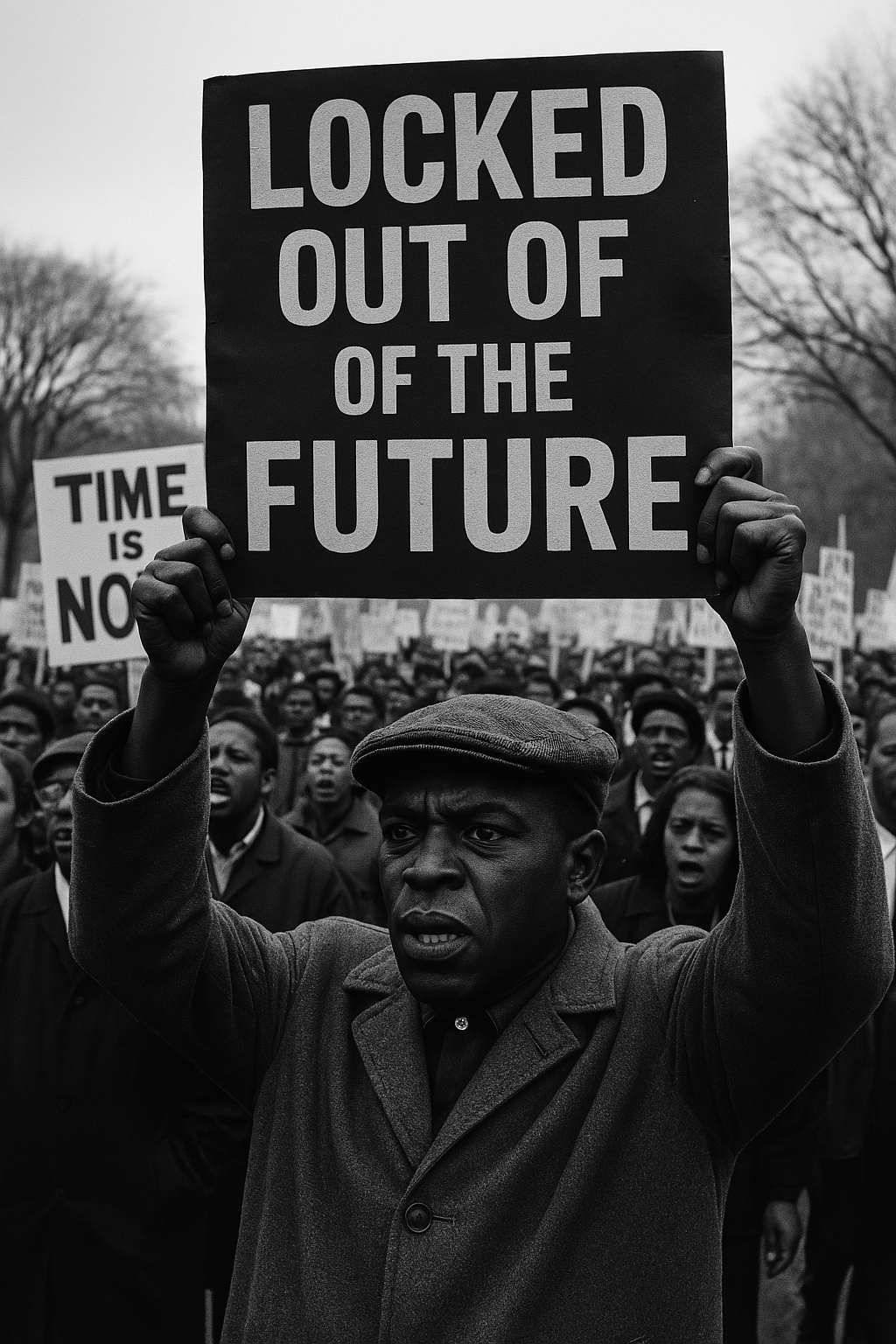
Locked Out of the Future: How Pittsburgh’s Innovation Economy Is Systematically Excluding Black Communities:
As Pittsburgh positions itself at the forefront of America’s energy and artificial intelligence revolution, a troubling pattern is emerging—one that mirrors the exclusionary practices of past industrial booms.
The upcoming Pennsylvania Energy and Innovation Summit at Carnegie Mellon University is being heralded as a milestone for the region’s economic transformation. Yet, for Pittsburgh’s Black communities, many of whom reside just miles from the summit’s epicenter, this transformation is not a promise of opportunity, but a harbinger of deepening exclusion.
As expected, a token few may be paraded through the summit halls, handpicked by gatekeepers of power to manufacture optics of inclusion. Their presence is not progress; it’s performance.
And in Pittsburgh, we’ve seen this theater before. It’s the same tired masquerade, repackaged for the innovation/social media age, while the communities most impacted remain locked out and unheard with leadership nowhere to be found.
Being locked out of all opportunity in the region is a call to conscience, a data-driven indictment, and a roadmap for resistance. It is a demand that the future being built in Pittsburgh must include those who have historically been left behind.
The Innovation Economy’s Racial Fault Line
Pittsburgh’s tech and energy sectors have experienced explosive growth over the past decade. According to the Allegheny Conference on Community Development, the region has attracted more than $10.5 billion in tech-related investments since 2015. Major players such as Google, Meta, Duolingo, and Aurora have established a strong presence, while Carnegie Mellon University continues to serve as a global hub for robotics and artificial intelligence.
Yet, this prosperity has not been equitably distributed. The data is stark:
- Black residents make up approximately 23% of Pittsburgh’s population, yet only 1.03% of the region’s 42,396 employer businesses are Black-owned.
- Black-owned businesses have declined steadily since 2017, now representing just one-eighth of the Black population’s share of the metro area.
- In the tech sector, Black and Hispanic workers remain underrepresented by nearly 50% nationwide, and Pittsburgh’s workforce reflects this disparity.
A 2023 Brookings Institution report warned that Pittsburgh’s innovation economy is at risk of becoming “a new engine of inequality,” replicating the exclusionary dynamics of Silicon Valley. Without intentional intervention, the city’s Black communities will be locked out of the very future being built around them.
And yes, the steel industry may resurface in the Mon Valley but let’s be clear, those jobs may be temporary at best, potentially vanishing under the shadow of automation and robotics. This resurgence is not a pathway to sustainable empowerment and generational wealth building; it’s a temporary smokescreen of hope.
The Energy and Innovation Summit: A Symbol of Systemic Exclusion
The Pennsylvania Energy and Innovation Summit is emblematic of this exclusion. The summit’s agenda includes panels on AI infrastructure, clean energy, and regional economic development. Its guest list, headlined by The President of the United States, features global tech and energy leaders—OpenAI’s Sam Altman, Microsoft’s Satya Nadella, Meta’s Mark Zuckerberg, and ExxonMobil’s Darren Woods.
What it does not include is meaningful representation from Pittsburgh’s Black communities, Black-led organizations, or equity-focused institutions. There are no sessions dedicated to racial equity, no Black keynote speakers, and no public commitments to inclusive economic development.
This is not an oversight. It is a design.
The summit’s structure reflects a broader pattern in Pittsburgh’s innovation ecosystem: Black communities are not seen as stakeholders, but as obstacles or afterthoughts. This exclusion is not only unjust, but also economically and socially unsustainable.
The Consequences of Exclusion
The cost of exclusion is not abstract. It is measurable, and it is devastating:
Nationally, only 1% of venture capital goes to Black founders. In Pittsburgh, where venture capital is increasingly concentrated in AI and energy startups, Black entrepreneurs are being denied access to generational wealth-building opportunities.
Being locked out means as AI and automation reshape labor markets, Black workers—already underrepresented in STEM fields—face disproportionate job loss. Without targeted upskilling and hiring initiatives, these communities will be further marginalized.
Being locked out means tech-driven gentrification is accelerating in neighborhoods like East Liberty and the Hill District. Rising property values and speculative development threaten to displace long-standing Black residents, severing cultural and familial roots.
A 2024 RAND Corporation study concluded that Pittsburgh’s innovation economy cannot thrive without racial diversity. Yet, the city’s current trajectory suggests that diversity is being treated as optional rather than essential.
The Role of Political and Institutional Failure
Pittsburgh’s progressive and Black leadership has failed to meet the urgency of this moment. Despite public commitments to equity, there has been little structural change.
Being intentionally locked out means no enforceable equity mandates tied to tech investments or public-private partnerships. No public accountability for exclusionary hiring and contracting practices. No unified urban agenda to mobilize Black political and economic power.
The Center for Economic Advancement has described this dynamic as “ritual politics”—a cycle of symbolic gestures and performative allyship that fails to deliver material outcomes. In the absence of bold, community-rooted leadership, Black residents remain spectators to their own erasure.
The Federal Funding Dilemma
One factor contributing to this exclusion may be the fear of jeopardizing federal funding. Pittsburgh has received millions through initiatives such as the Build Back Better Regional Challenge and the CHIPS and Science Act. These funds are often tied to performance metrics and partnerships with elite institutions.
Raising equity concerns, particularly those that challenge the status quo or politically “biting the hand that feeds you,” risks disrupting the narrative of progress that secures these grants. But silence in the face of injustice is not neutrality. It is complicity.
If federal dollars are being used to build an economy that excludes the very communities they were meant to uplift, then those funds are not investments, they are instruments of harm. Knowingly and willfully being used by leadership.
A Blueprint for Inclusion: Tangible Actions
To those being locked out: you are not powerless. The following actions can help reclaim agency and demand accountability.
Call for public audits of tech investments, hiring, and contracting by race.
Advocate for equity impact assessments before any public-private partnership is approved.
Build Independent Economic Power
Support Black-led venture funds such as Black Tech Nation Ventures. Launch community-owned data cooperatives and tech incubators.
Mobilize and Organize
Use platforms like our #AI4Equity to elevate demands during the summit and beyond. Convene a People’s Innovation Forum to present a counter-vision rooted in justice and community ownership.
Most importantly, those being locked out must hold leaders accountable.
Demand that elected officials tie public support to enforceable equity benchmarks. We must replace ineffective leadership with bold, visionary advocates for systemic change.
A Moral and Economic Imperative
To the organizers of the Energy and Innovation Summit, to Carnegie Mellon University, to the CEOs and policymakers shaping Pittsburgh’s future: you cannot claim to build a just and prosperous economy while excluding the very people who built this city.
Pittsburgh’s Black communities are not invisible. They are not expendable. They are not waiting for permission. They are demanding a seat at the table.
It would be extraordinary if Black folks in the region could build their own, but as the legacies of slavery, Jim Crow, and erasure accelerates, those aspirations are becoming nothing more than pipe dreams without Federal and industry assistance.
The future of Pittsburgh, and of America’s innovation economy, depends on whether we choose inclusion or entrench inequality. The time to decide is now.
Leave a Reply