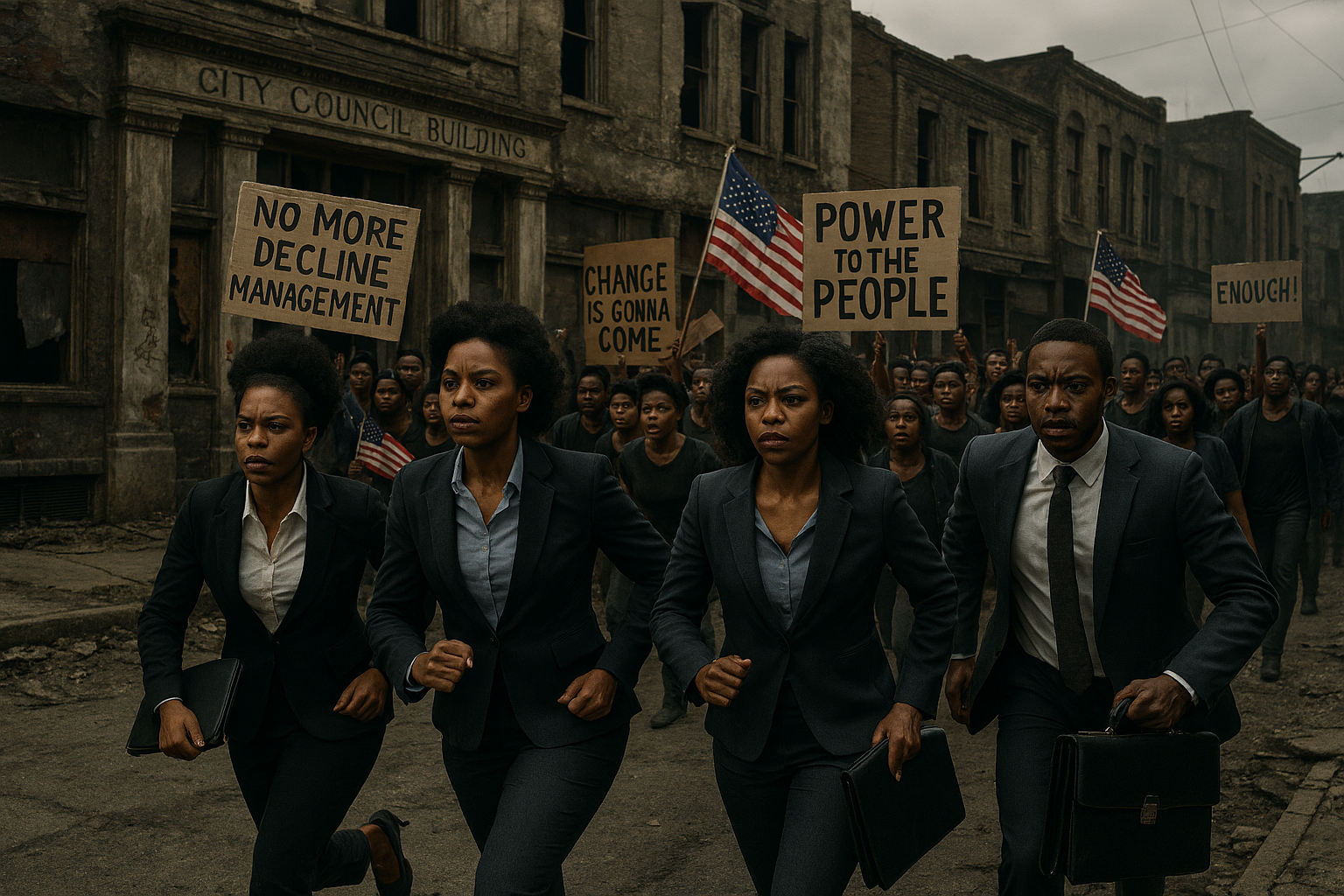
The Unfinished Mandate: A Moment That Demands More Than Celebration
Black History Month has always been a time of remembrance and reflection. But in 2026, remembrance without mobilization and authentic action is malpractice. Reflection without organization is surrender. Symbolism and political screaming without structural change is betrayal.
The data is unambiguous. ADOS communities remain the most economically deprived, politically neglected, and structurally marginalized group in the United States.
The Economic Policy Institute’s racial disparities chartbook shows that across income, wealth, health, education, and life expectancy, Black Americans continue to face the steepest inequities of any major racial group. Racial and ethnic disparities in the United States: An interactive chartbook | Economic Policy Institute
This is the unfinished mandate, the work our ancestors began but that America has refused to complete.
The Data: ADOS Is Still America’s Most Economically Vulnerable Group
Income, Wealth, and Mobility
The Race and Economic Opportunity Study from the U.S. Census Bureau reveals that racial disparities in income and mobility remain among the most persistent features of American society. Race and Economic Opportunity Data Tables
Even when controlling for parental income, Black children are significantly less likely than white children to achieve upward mobility. This is not a coincidence; it is the predictable outcome of structural barriers that have never been dismantled.
Employment and Poverty
While recent years have shown improvements, such as the “so-called” record-low Black unemployment in 2023, the deeper picture remains bleak.
The Center for Economic and Policy Research reports that despite record employment numbers, Black Americans continue to face “near never‑ending inequality and insecurity,” including widespread asset poverty and persistent Black‑white economic gaps. The Best Black Economy in Generations – And Why It Isn’t Enough – CEPR
In other words, even when ADOS communities “win,” the game is still rigged.
Geographic Disparities: The Worst Places in America to Be Black
Cities often celebrated as progressive, Pittsburgh, Milwaukee, Minneapolis, Chicago, Cleveland, and other democratic run cities throughout the south, rank among the worst places in America for Black well‑being, with bottom‑tier outcomes in health, education, income, and life expectancy.
This is not accidental. It is the result of decades of disinvestment, political neglect, and leadership that manages decline rather than fights for transformation. These regions, among others, must be the front lines of the 2026 movement.
The Leadership Crisis: Decline Management vs. Liberation Governance
ADOS communities are not suffering because of a lack of talent, intelligence, or willpower. They are suffering because too many leaders, local, county, state and federally, have become managers of decline, not architects of liberation.
The Unfinished Mandate demands that we confront this truth without fear or apology.
Decline Management Leadership oversees shrinking Black populations, accepts failing schools as inevitable, normalizes poverty as a cultural issue rather than a policy outcome, prioritizes symbolic gestures over authentic structural change.
They avoid conflicts with entrenched political machines, consultants, elite hands that feed them and celebrates “representation” while delivering no material gains. This leadership model has failed ADOS communities for decades and it must be replaced, systematically, strategically, and unapologetically.
The Call: A Year‑Long National Grassroots Campaign Beginning in 2026
Black History Month 2026 must be the spark, not the celebration.
The unfinished mandate requires a national and continuous ADOS movement on the scale and in the spirit of the original Civil Rights Movement. Not a hashtag. Not a moment. Not a screaming politician seeking social media clicks. A year‑long, disciplined, grassroots campaign built on three suggested pillars.
Pillar 1: Voter Education Rooted in Reality, Not Party Loyalty
ADOS communities must be equipped with clear, data‑driven understanding of local power structures and their tangible accomplishments.
Knowledge of how school boards, county commissions, and municipal governments shape daily life and awareness of which policies produce harm, and who is responsible.
And tools to evaluate candidates based on outcomes, not identity. This is not about partisanship. It is about survival.
Pillar 2: Cultivating New Black Leadership for a New Era
The Civil Rights Movement succeeded because it produced leaders who were grounded in reality, community, disciplined, courageous, strategically trained, and willing to confront power, even if it meant losing their proximity to it.
ADOS communities must cultivate a new generation of leaders who embody these traits, leaders who reject decline management and embrace liberation governance.
This includes youth leadership pipelines, political education programs starting at a young age, community organizing academies, policy literacy workshops, and Intergenerational mentorship.
Pillar 3: Removing Decline Management Leadership at Every Level. This is the most difficult pillar, and the most necessary.
The Unfinished Mandate demands that ADOS communities replace ineffective school board and council members, city managers, and challenge entrenched local political machines every cycle or chance they get.
Hold county officials accountable for inequitable resource distribution. Demand measurable outcomes, not symbolic representation, Build independent and disruptive political infrastructure. This is not about disrespect; it is about responsibility.
Why Local Power Is the Battlefield
National elections matter, but local government determines daily life.
School quality, policing, housing, public transportation, health access, economic development, and environmental safety If ADOS communities do not control local power, they do not control their future.
This is why the unfinished mandate must begin at home, in the neighborhoods, boroughs, and counties where ADOS families live, struggle, and fight to survive.
The Spirit of the Civil Rights Movement: Discipline, Sacrifice, Strategy
The original Civil Rights Movement was not spontaneous. It was not symbolic. It was not performative, driven by social status or clicks.
It was organized, strategic, data‑driven, rooted in community institutions, sustained over years, fueled by moral clarity and collective discipline. With it’s ending came the rise of the Black managerial class.
The Unfinished Mandate calls us to reclaim that spirit, not as nostalgia, but as necessity.
The Charge for 2026: Mobilize, Organize, Educate, Build, Replace, Reclaim
This Black History Month and every day after, for years to come, ADOS must honor our ancestors by completing the work they began.
The Unfinished Mandate is clear; Mobilize our communities. Organize our neighborhood. Educate our voters. Build new leaders. Replace decline management leadership.
And reclaim our political power. Not for symbolism. Not for ceremony. For survival. For dignity. For liberation. For Reparations.
The Next Chapter Must Be Written by Us
The data tells the truth. History tells the truth. Our lived experience tells the truth. ADOS communities are at a crossroads in 2026.
One path leads to continued decline and being the first group ushed into the coming useless class. The other leads to power, self‑determination, claiming owed Reparations, and a future worthy of our ancestors’ sacrifice.
The Unfinished Mandate is ours to complete. And the work begins NOW.
In 2026, ADOS communities face a brutal truth; federal promises are hollow, corporate gestures/current leaders are performative, mainstream institutions, and philanthropic organizations continue to fail us. The only real power we have at this moment is the power we build ourselves.
Grassroots organizations, rooted in lived experience, radical accountability, and community survival, are the frontline defense against displacement, poverty, and political erasure.
They are the architects of authentic liberation, not managers of decline. Supporting them isn’t charity, it’s critical strategy.
It’s how we protect our elders, empower our youth, and reclaim our future. If we don’t collectively fund our fight, we forfeit our freedom. Please considered visiting the link on how to help us continue to advance our justice work.
An Important Update About How to Give in 2026
Leave a Reply