The Silence Season Surge is a dire Warning to ADOS communities as election cycles reset
Every generation has its signals, the subtle shifts in the air that tell a community what time it is. For ADOS communities across the country, especially in long‑neglected regions like Western Pennsylvania, the signal is unmistakable. It is predictable. It is ritualistic. And it is insulting.
It is what we call The Silence Season Surge.
This is the moment, every two to four years, when communities that have been ignored, underfunded, and politically abandoned suddenly become visible again. Not because their needs have changed. Not because their crises have been addressed. Not because their elected officials have finally awakened to their suffering.
But because it’s election season. And the ritual begins.
The Silence Season Surge: How ADOS Communities Are Conditioned to Recognize Election Time.
For decades, ADOS neighborhoods have learned to recognize election season not by progress, not by investment, not by transformation, but by the sudden, synchronized choreography of political performance.
Mailers flood mailboxes with smiling faces and vague promises. What Makes a Political Mailer Effective? A Complete Guide to Winning Voter Attention with Mail. | Burlington Press
Photo ops appear in neighborhoods where officials haven’t set foot since the last election cycle.
Social media posts multiply, showcasing elected officials “walking the streets,” “meeting residents,” or “checking on progress” that never actually materialized. Social media and modern news behavior: A mixed-methods investigation of news dissemination, political polarization, and the rise of echo chambers | Current Psychology | Springer Nature Link
Exaggerated claims surface about “millions secured,” “Billions in historic investments,” or “unprecedented support.”
And, right on cue, a few symbolic grants, the political equivalent of throwing a few bones, are highlighted for optics.
This is The Silence Season Surge in full effect: A sudden burst of visibility after years of silence.
A recent CBS Pittsburgh report, “How one Pittsburgh-area borough is capitalizing on blight to create jobs,” How one Pittsburgh-area borough is capitalizing on blight to create jobs – CBS Pittsburgh highlights a painful truth.
For years now this organization has been submitting funding and grant requests arguing that blight could be leveraged to create jobs and revitalization, but those requests were sweep under the rug, ignored, or denied.
And while the initiative to transform blight into jobs is commendable and should not be dismissed, it must be said plainly. Efforts like these should not be the exception, they should be the baseline, especially in the most neglected ADOS communities across the Mon Valley and Allegheny County.
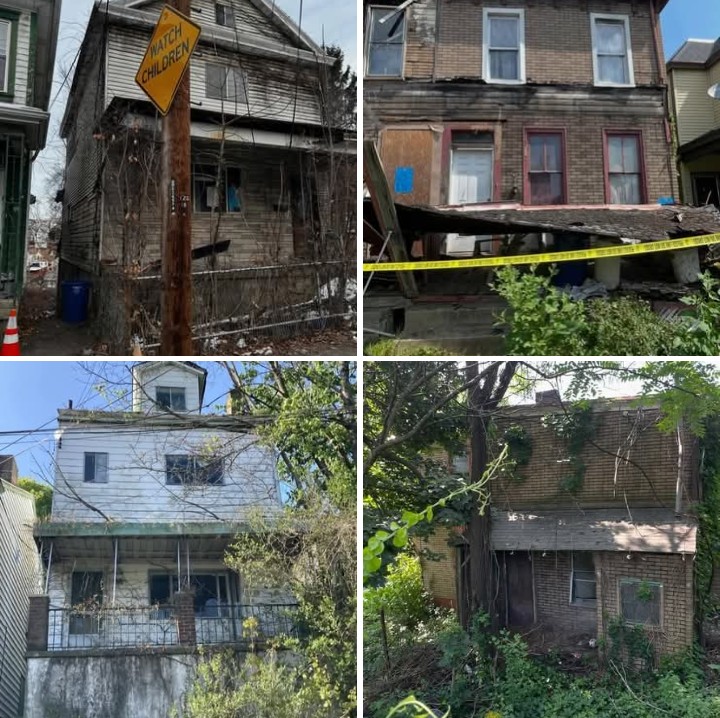
For decades, ADOS neighborhoods have been the epicenter of disinvestment, environmental decay, and political abandonment. In Braddock, Rankin, Duquesne, McKeesport, and Clairton among others, vacancy rates have soared above 30%, poverty among Black residents has climbed year after year, and infrastructure remains dangerously outdated.
Yet these communities rarely see sustained, year-round investment only seasonal gestures timed around elections or grant submission cycles.
If blight can, all of the sudden, be leveraged to create jobs as we have been suggesting for years, then why can’t there be year-round funding for the places where blight has been weaponized against residents for generations?
The answer is not a lack of need. It’s a lack of political and Foundation will.
As this organization has been arguing for years, until measurable, tangible results are delivered, until ADOS communities are made whole, the bulk of all County, State, Federal, and Foundation funding should be flooded into the most impacted neighborhoods.
Not as charity. Not as optics. Not as a few symbolic bones being thrown around elect season. But as overdue justice.
As upholding the political oaths or mission statements to steer the bulk of all available and secure resources to the most in need constituents and communities, not the opposite, where currently the most in need communities are receiving only a bare minimum fraction of what’s available, if that,
Again, if current leadership cannot, are unwilling too, or incapable to deliver that level of year-round commitment, then they should step aside or change their mission statements.
Because during these terrifying and dark days of historic rollbacks and regression for ADOS, basic needs and survival should not be seasonal. And transformation should not be reserved for convenience.
This is not coincidence. This is not oversight. This is policy and generational patterns of decline management. And within politics, it is reinforced every election cycle through The Silence Season Surge.
The Data Behind the Decline: What the Numbers Reveal
Across the country, ADOS communities consistently rank among the lowest in Infrastructure investments Inequality in infrastructure access and its association with health disparities | Nature Human Behaviour
Public health outcomes Bing Videos Black/African American Health | Office of Minority Health and Economic mobility Income Inequality and Social Mobility: Examining Economic Opportunities for All
Housing quality and stability Racial Inequities in US Housing: 2025 Report
Access to fresh food, transportation, and essential services State-Level Socioeconomic Racial Inequity and Food Insecurity in the U.S. – ScienceDirect Addressing Transportation Inequality in Black Communities
Specifically in the City of Pittsburgh and Allegheny County region, there has been clear evidence, since 2019, of vast gaps in quality of life along racial and gender lines A call for urgent investment in Pittsburgh’s Black women
Yet these same communities are the first to receive political attention when votes are needed, and the first to be forgotten once ballots are counted.
This is not accidental.
This is The Silence Season Surge doing exactly what it was designed to do, create the illusion of engagement without delivering the substance of ongoing change.
The Psychological Toll: Generational Propaganda and Manufactured Gratitude
One of the most damaging aspects of this cycle is the emotional manipulation embedded within it. ADOS communities are conditioned to feel grateful for crumbs.
Grateful for attention. Grateful for a grant. Grateful for a photo op. Grateful for a promise. But gratitude is not the appropriate response to bare-minimum governance.
The appropriate response should be outrage, because the truth is simple.
If elected officials, at any capacity, only show up when they need something, they are not serving you, you are serving them. And that is not democracy. That is dependency engineering.
The Demand: Flood the Most Neglected Communities with the Bulk of All Public Funding
Again, here is the core truth ADOS residents should try to internalize, until realistic, measurable, tangible results are evident, until communities are made whole, the bulk of all County, State, Federal, and Foundation funding should be directed to the communities with the greatest need.
Not as charity. Not as a favor. Not as a political gesture. But as a matter of justice, equity, and constitutional responsibility.
This includes Infrastructure repair and modernization, housing rehabilitation and development. Alternative Black owned and controlled healthcare systems and educational structure targeted investments.
Economic development targeted at residents, not outside developers, Transportation access. Food security and environmental safety. Youth programming and workforce development. Anything less is not leadership; it is maintenance of decline.
The Accountability Clause: Step Up or Step Aside
ADOS communities must adopt a new standard. If you cannot deliver consistently for your most in need, you cannot lead. If elected officials are unwilling, unable, uninterested, or incapable of delivering the transformation they were elected to produce, especially after 5-10 years, then they must step aside or be replaced.
Leadership is not a title or a social status gig. It is a responsibility. And ADOS communities have carried the burden of failed leadership for far too long.
Breaking the Cycle: Rejecting the Silence Season Surge
The Silence Season Surge thrives on predictability. It thrives on low expectations. It thrives on communities being too exhausted to demand more.
But exhaustion is not defeat. And awareness is the first step toward liberation.
ADOS communities should continue to document the pattern. Call out the ritual. And reject symbolic gestures. Demand year‑round investment not only from leadership but from Foundations. Hold every official accountable.
And work like never before to replace decline‑managers with true builders who are committed to delivering. Because the future of these communities cannot be built on seasonal attention and cyclical abandonment.
Final Warning: The Surge Has Begun; Do Not Be Distracted
As election season approaches, expect more mailers, more photo ops, more exaggerated claims, more highlighting of symbolic grants, and more sudden visibility in our most left behind and neglected communities.
But this time, recognize it for what it is, the silence seasons, a generational tactic designed to pacify, distract, and reset the cycle of decline.
Do not fall for it. Refuse to normalize it. Do not continue to reward it. This is the moment to demand more. This is the moment to insist on year-round transformation.
This is the moment to break the ritual. Because ADOS communities deserve more than seasonal attention. They deserve justice. They deserve constant investment. They deserve leadership across all sectors that shows up every day, not just every election or for convenience.
Leave a Reply