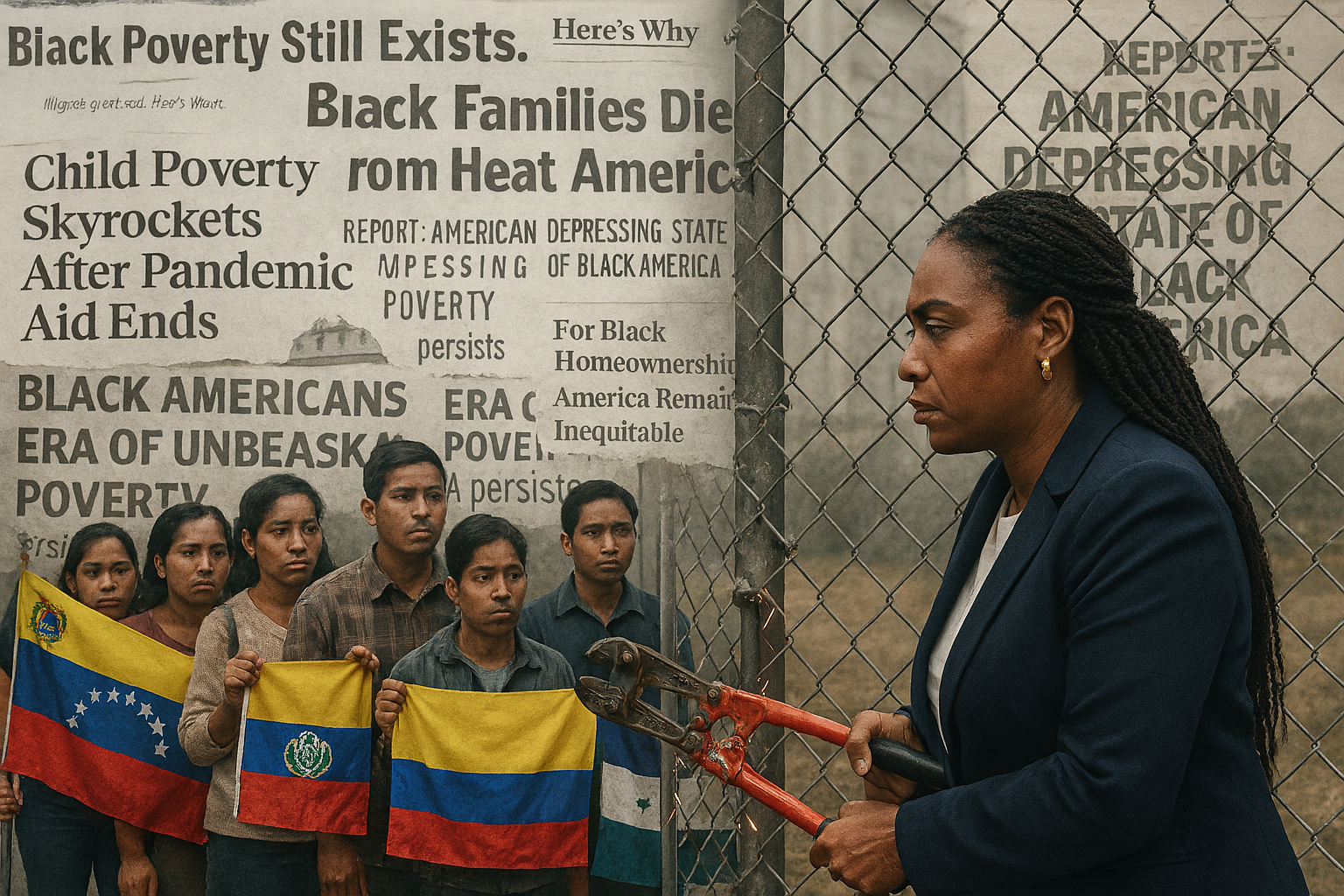
The Betrayal Blueprint Is Real
In the corridors of power and the stages of protest, a devastating contradiction plays out daily. Black leaders who claim to fight for justice, equity, and liberation have abandoned the very people whose suffering built the foundation of their platforms.
American Descendants of Slavery (ADOS) remain the most economically dispossessed, politically neglected, and socially erased group in the country, while performative Black leadership redirects its energy toward symbolic victories and pan-ethnic coalitions that exclude ADOS needs.
This is not oversight. It is design. It is the betrayal blueprint that’s been rapidly growing over the past decade or so.
The Data of Dispossession: ADOS Left Behind
The numbers are not just damning; they are a roadmap of betrayal. Black child poverty nearly doubled in one year, rising from 8.3% to 19.5% after pandemic aid expired (U.S. Census Bureau).
Black homeownership stagnates at 44%, compared to 65% for white Americans (Urban Institute). Food insecurity hits Black households hardest, with 20% reporting insufficient access to food (USDA Report). Black children face higher rates of maltreatment, driven by poverty and systemic neglect (Child Trends).
These statistics are not just numbers—they are the wreckage of a leadership class that has chosen optics over obligation.
Performative Leadership: Fighting for Everyone But Us
Performative Black leadership has mastered the art of symbolic inclusion while abandoning structural transformation for ADOS communities:
NYC Mayor Eric Adams diverted millions to migrant resettlement while cutting services in Black neighborhoods (NYC Budget Analysis). The Congressional Black Caucus consistently prioritizes immigration reform and DEI initiatives that dilute ADOS-specific agendas (CBC Immigration Priorities).
The NAACP’s global Pan-African focus sidelines reparative justice for ADOS in favor of transnational solidarity (NAACP Africa Strategy). This is The Betrayal Blueprint in motion: a leadership class that weaponizes identity while abandoning the people whose identity is rooted in generational suffering.
The Cost of Misleadership: Regression Disguised as Progress
The consequences of this betrayal are measurable and devastating. Affirmative action rollback disproportionately harms ADOS students (Brookings Analysis). Grassroots ADOS movements are underfunded, while intersectional coalitions receive institutional support (Philanthropic Redlining Report).
Civil Rights legacy is being erased, as many in leadership reframes Black struggle through a pan-ethnic lens (AAIHS Critique). This is not progress—it is regression disguised as inclusion. It is The Betrayal Blueprint.
Reclaiming Leadership: Building Beyond Symbolism
ADOS must reject performative leadership and cultivate a new generation of Black liberation-minded leaders who center ADOS truth, autonomy, and justice.
The ADOS Advocacy Foundation demands immigration policy that accounts for the economic harm to Black Americans. The Stanford Black Scholar Study shows that real change has always come from insurgent, community-rooted leadership.
The AAIHS report urges us to abandon the myth of linear progress and confront the reality of betrayal. This is not just a leadership crisis; it is a moral emergency.
From Symbolism to Sovereignty: Building the Infrastructure of Liberation
New Black leadership must move beyond the optics of inclusion and into the architecture of autonomy. We are not here to be integrated into broken systems, we are here to build our own, eventually creating an even playing field, and to participate as equal citizens in our homeland.
That means securing reparations and catalytic investments not as charity, but as overdue restitution for centuries of extraction, exclusion, and erasure.
This leadership must be unapologetically focused on industry Creation, developing Black-owned supply chains, manufacturing hubs, and cooperative economies that circulate wealth within our communities.
Healthcare Systems: Establishing culturally competent, community-rooted health infrastructures that prioritize healing, dignity, and access. Educational Structures: Designing liberatory learning environments that teach truth, cultivate leadership, and prepare our youth to build—not beg.
Housing Markets: Reclaiming land, resisting displacement, and creating sustainable housing models that protect against predatory development. Economic Insulation: advocating for policies and protections that shield historically excluded communities from being economically outcompeted or displaced by legal migration and global labor shifts—without scapegoating, but with strategic clarity.
This is not only about exclusion, It’s about survival. It’s about building power that is insulated from the volatility of external forces and rooted in the lived needs of ADOS communities. Reparations are not symbolic, they are structural. And leadership that refuses to demand them are not leading.
We are not asking for permission. We are reclaiming what was stolen, owed, and building what was never offered or permitted.
Dismantling The Betrayal Blueprint
ADOS communities are not asking for charity. We are demanding justice. We are the survivors of slavery, the builders of democracy, and the architects of liberation.
The Betrayal Blueprint must be dismantled, brick by brick, lie by lie. And in its place, we must construct a leadership model rooted in radical accountability, truth, and transformative impact.
Because if Black leadership cannot fight for the people who’ve endured the longest, then it is not leadership, it is betrayal.
Leave a Reply