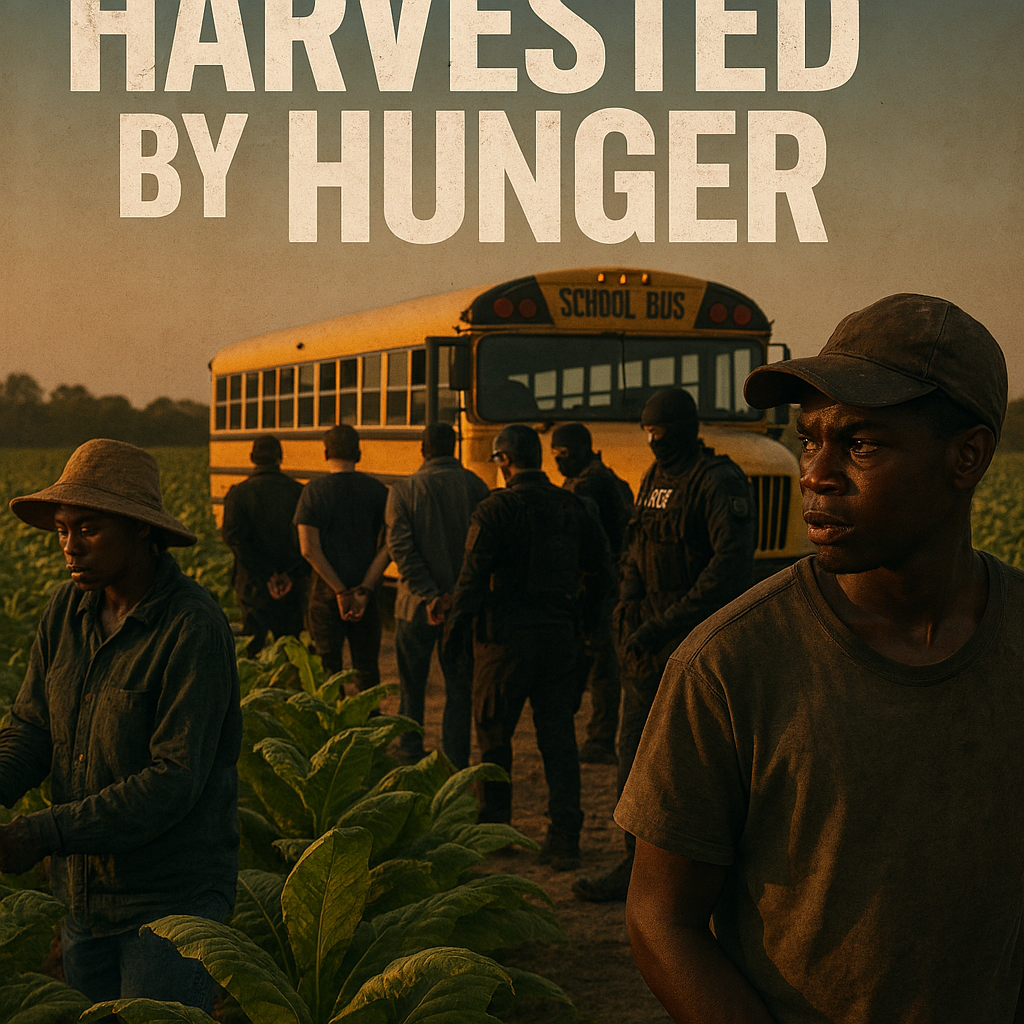
Harvested by Hunger: How SNAP and Medicaid Work Mandates Threaten for ADOS Communities
In the shadow of the “One Big Beautiful Bill Act,” a chilling reality is emerging. Millions of low-income Americans, especially targeted ADOS (American Descendants of Slavery), are being cornered into a system that eerily mirrors the labor exploitation of the Jim Crow South. The phrase “Harvested by Hunger” is no metaphor. It is a warning.
The Policy Shift: Coercion Disguised as Reform
Signed into law on July 4, 2025, the One Big Beautiful Bill Act mandates that able-bodied adults aged 19–64 must work at least 80 hours per month or engage in qualifying activities to retain access to Medicaid and SNAP.
This includes working or participating in a job training program. Enrolling in school half-time. Earning income equivalent to 80 hours at minimum wage. Failure to comply can result in termination of benefits, including food assistance and healthcare—two lifelines for economically marginalized communities.
Behind Closed Doors: Medicaid Recipients as the New Farm Workforce
While public messaging frames the new SNAP and Medicaid work mandates as “self-sufficiency,” internal remarks from top officials reveal a more strategic—and disturbing—agenda. The administration is quietly positioning Medicaid recipients as replacements for deported undocumented migrants and legal migrants too terrified to return to work amid escalating ICE raids.
Agriculture Secretary Brooke Rollins stated bluntly that the administration’s plan to protect the food supply includes “automation, reform within the current governing structure, and 34 million able-bodied adults in our Medicaid program” as a labor solution. This isn’t speculation, it’s a blueprint.
ICE has ramped up workplace raids and mass deportations of undocumented farmworkers, leaving crops unharvested and farmers desperate. Rollins confirmed there will be “no amnesty” for migrant laborers, but that Medicaid recipients could be mobilized to fill the gap.
Trump floated a plan to let farmers “be in charge” of housing and supervising laborers to avoid ICE interference—a proposal civil rights experts say resembles indentured servitude.
This quiet pivot—from deportation to domestic conscription—signals a terrifying shift: using hunger and healthcare access as leverage to extract labor from the poor, especially ADOS communities. “Harvested by Hunger” isn’t just a metaphor. It’s the machinery of modern-day indenture servitude. A system where the poor are harvested by hunger, their labor extracted under threat of starvation.
The Data: Disenrollment, Not Employment
Despite claims that these mandates will “encourage self-sufficiency,” the evidence tells a darker story. In Arkansas, over 18,000 people lost Medicaid due to work requirement reporting failures—not because they refused to work, but because they couldn’t navigate the bureaucracy.
A KFF analysis found that 91% of Medicaid recipients are either working or face legitimate barriers to work (illness, caregiving, school). SNAP work requirements have led to a 64% increase in program exits, with no measurable rise in employment. This isn’t policy innovation. It’s administrative purging in the age of erasure.
Historical Echoes: From Convict Leasing to Workfare
The structure of these mandates—labor in exchange for survival—resurrects the logic of convict leasing, where Black bodies were commodified under the guise of legality. During Reconstruction, Southern states criminalized poverty and leased incarcerated Black men to private companies for profit. Today, the threat of losing food and healthcare is being used to funnel ADOS individuals into low-wage, physically demanding labor—often in agriculture, the very fields their ancestors were forced to work.
The Economic Policy Institute warns that forced labor policies disproportionately impact Black men, especially in the South, where incarceration and labor extraction remain deeply racialized.
The ADOS Impact: Hunger as Leverage, Labor as Punishment
ADOS communities are uniquely vulnerable because they are overrepresented in Medicaid and SNAP due to systemic exclusion and wage suppression. Under protected by exemptions, especially parents with children over age 14.
Historically targeted by punitive labor policies, from Jim Crow vagrancy laws to modern workfare schemes the result; a pipeline from poverty to coerced labor, where hunger becomes a tool of compliance. “Harvested by Hunger” is not just a phrase, it’s a mechanism.
Structural Consequences: Erosion of Autonomy and Dignity
This policy doesn’t just strip benefits. It strips choice. It treats ADOS citizens as a labor pool to be managed, not as individuals with rights. It will undermine community autonomy by forcing survival decisions into state-controlled frameworks. It risks creating a new bottom caste of “benefit-bound workers,” whose labor is extracted under threat of destitution.
As Brookings notes, most recipients already work. These mandates don’t promote employment, they promote surveillance, disenfranchisement, and fear.
Naming the Wreckage, Building the Resistance
We must name this for what it is, a potential return to indentured servitude, repackaged in policy language. “Harvested by Hunger” must become a rallying cry—a demand for radical accountability, narrative change, and ADOS-led resistance. Let this be a warning. Let it be a blueprint. Let it be a refusal.
Leave a Reply