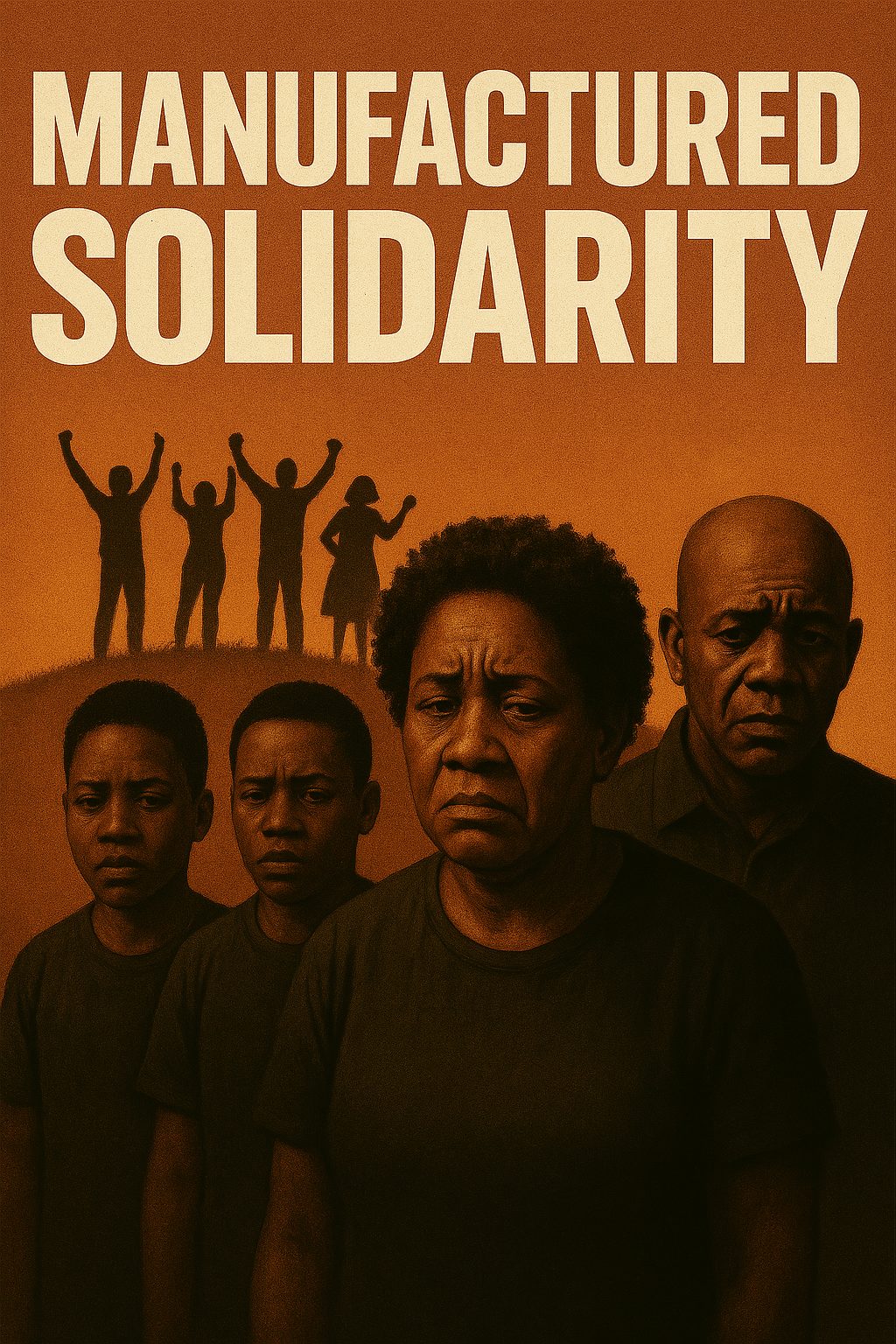
Manufactured Solidarity is not just a political tactic; it’s a systemic strategy.
For decades, elite political consultants and institutional power brokers have engineered racial solidarity campaigns that appear inclusive but consistently leave Black communities behind.
From Pan-Africanism’s diluted legacy to the rise of Black/Brown and Black/Asian unity narratives, these efforts have often served as Manufactured Solidarity, masking inequity, redirecting resources, and uplifting other groups while Black Americans, particularly descendants of enslaved Africans, remain locked out of transformative progress.
The Illusion of Pan-Africanism: A Global Vision, Local Neglect
Pan-Africanism emerged as a powerful force for liberation, unity, and resistance against colonialism. Leaders like Kwame Nkrumah and W.E.B. Du Bois envisioned a united front for African-descended people worldwide.
But in the U.S., Pan-Africanism has often been co-opted by elite institutions and consultants to promote cultural pride without policy power.
While Pan-Africanism inspired decolonization across Africa (History Rise), its U.S. adaptation rarely translated into economic or legislative gains for Black Americans, specifically ADOS.
The African Union and AfCFTA promote continental unity, but descendants of enslaved Africans in the U.S. remain excluded from global reparations conversations (AfricanDev). Manufactured solidary has turned Pan-Africanism into a symbolic gesture, rich in rhetoric, poor in results.
Manufactured Solidarity: Who Really Benefits?
Black/Brown and Black/Asian solidarity campaigns have been heavily promoted by elite political consultants, often during election cycles or moments of racial unrest. While these efforts claim to build unity, they frequently redirect attention and resources away from Black-specific policy demands.
The Model Minority Myth has been weaponized to uplift Asian Americans as proof of racial progress, while undermining Black struggles for equity (TIME).
South Asian and Latino communities have gained political traction through shared platforms, yet Black communities continue to face the highest rates of incarceration, unemployment, and school underfunding (Indiaspora). These solidarity efforts often serve as manufactured solidarity, creating the illusion of collective progress while reinforcing racial hierarchies.
The Data: Black Communities Left Behind
Black women’s labor force participation has dropped below that of Latinas for the first time in over a year, following federal downsizing that targeted public-sector jobs where Black women held the strongest foothold.
Black homeownership remains stagnant at around 44%, compared to 74% for white Americans, with property tax burdens disproportionately higher for Black homeowners (Brookings).
Black-owned cannabis businesses make up less than 2% of the industry, despite Black Americans being nearly 4x more likely to be arrested for marijuana possession (Marijuana Moment). These disparities are not accidental; they are the result of manufactured solidarity campaigns that prioritize optics over outcomes.
The Role of Elite Political Consultants
Political consultants have mastered the art of messaging without movement. They craft solidarity slogans, stage multicultural photo ops, and build coalitions that dilute Black demands.
Many consultants specialize in fundraising and polling, shaping campaigns that appeal to broad demographics while sidelining reparative policies for Black Americans (Best Political Consultants).
Black consultants themselves have raised concerns about being tokenized within larger firms that prioritize corporate interests over community impact (The Black Consultant Group). Manufactured solidarity is their currency, selling unity while delivering exclusion.
The Call to Action: End Manufactured Solidarity
We must reject performative solidarity and demand targeted, data-driven policy that centers Black communities.
Reparations for descendants of enslaved Africans, Cannabis equity programs with guaranteed Black ownership. Tax reform to eliminate property tax, school and other entrenched disparities. Education funding tied to need, not zip code.
Manufactured solidarity has cost ADOS decades of progress. It’s time to reclaim the narrative, redirect the resources, and rebuild with unapologetic clarity.
Join the movement. Demand truth. Build new and authentic allyships, End Manufactured Solidarity.
Leave a Reply