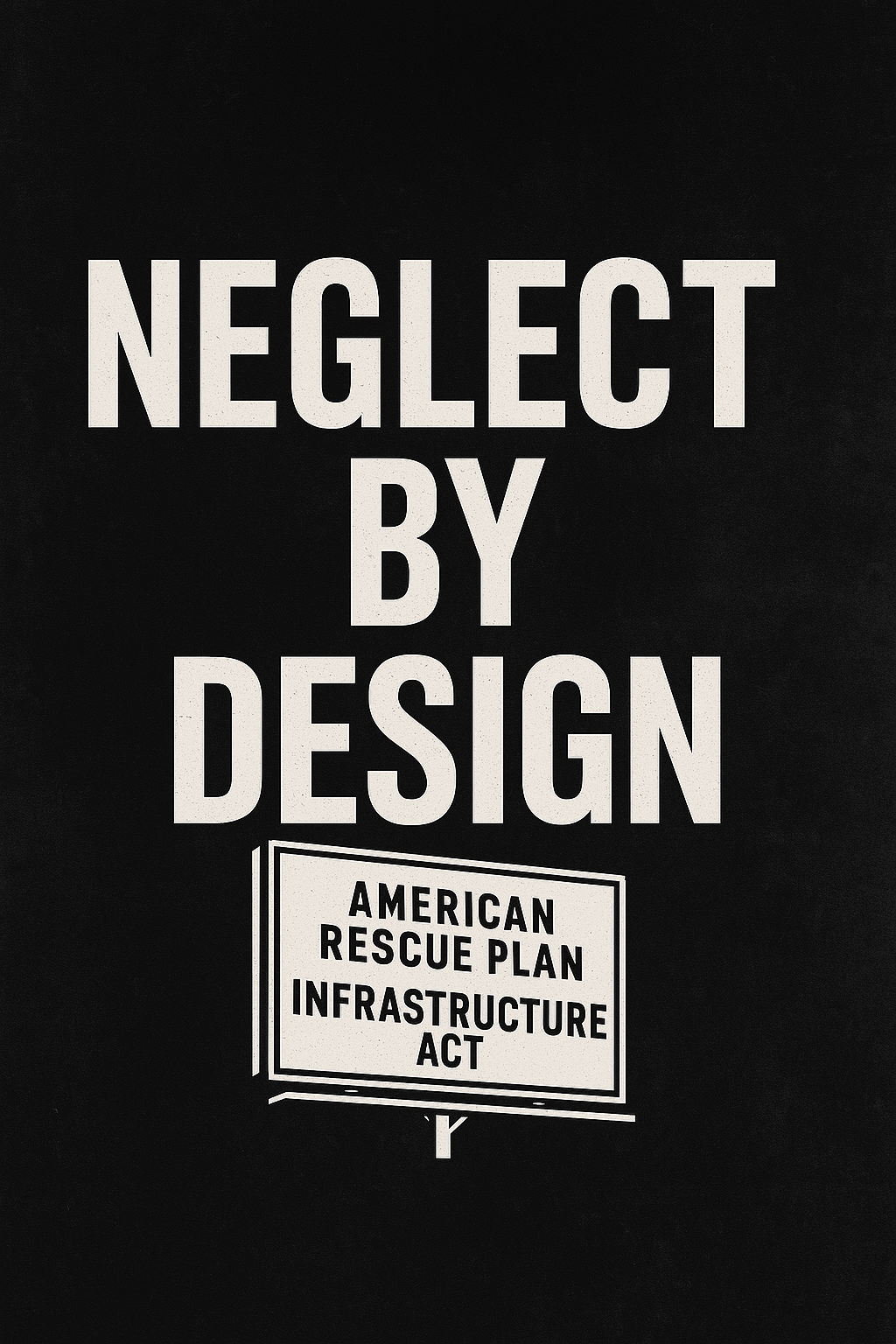
Neglect by Design: How “Universalism” Betrays Black Communities and Undermines Black Leadership.
In the American political landscape, few communities have been more consistently neglected yet expected to lead, than Black American Descendants of Slavery (ADOS).
While Black elected officials often rise as symbols of progress, their leadership is frequently shackled by a dangerous political posture: the “save the world” mentality.
This universalist approach, which prioritizes broad coalitions and generalized equity, has proven detrimental to the very communities these leaders were elected to uplift.
Historical Harm: The Roots of Systemic Neglect
ADOS communities have endured centuries of exclusion, from slavery and Jim Crow to redlining and mass incarceration.
Today, they remain disproportionately affected by the lineage wealth gap. The median Black family holds just $24,000 in wealth compared to $188,000 for white families (Brookings).
Underfunded schools. Black students are more likely to attend schools with fewer resources, outdated materials, and inexperienced teachers (NCES).
ADOS communities are often locked out of emerging industries like tech and energy, especially in cities like Pittsburgh (Braddock Inclusion Project).
Despite these realities, Black elected officials are frequently pressured to champion universal policies that dilute lineage-specific justice.
The Cost of “Saving the World” First: Neglect by design in representation. When symbolism replaces substance in Black political leadership.
The expectation that Black leaders must fight for every marginalized group, while their own communities languish, has led to a sever Black leadership crisis and agenda dilution.
Universalist policies often sidestep ADOS-specific needs like reparations, land ownership, and targeted economic development. Diversity initiatives prioritize broad racial categories, leaving ADOS concerns buried beneath generic equity language (ADOS Foundation).
Black leaders are expected to be moral compasses for all, stretching their influence thin and undermining their ability to deliver tangible wins for impoverished Black communities (Joint Center).
When constituents see their needs deprioritized, it breeds mistrust. Many ADOS communities feel abandoned by leadership that appears more invested in coalition optics than community uplift (Pew Research).
When local governments celebrate inclusion but ignore food deserts, crumbling schools, and eviction spikes in Black neighborhoods, that is neglect by design.
Performative Politics: A Silent Saboteur
In progressive-led cities like Pittsburgh, performative politics has become a substitute for real change. Symbolic gestures, viral hashtags, and diversity statements often replace substantive policy. Even Black elected officials fall into this trap, prioritizing visibility over material transformation (Braddock Inclusion Project).
Despite public statements supporting reparations, few cities have enacted meaningful economic redress. Instead, ADOS communities face gentrification and displacement. Underfunded schools, and exclusion from innovative economies.
In the aftermath of the pandemic, two federal bills, the American Rescue Plan (ARP) and the Infrastructure Investment and Jobs Act (IIJA), were hailed as historic lifelines for underserved communities.
Black elected officials across the country seized on their passage, touting them as proof of progress and equity. Campaign flyers, stump speeches, and social media feeds were flooded with promises of transformation: clean water, broadband access, housing relief, and economic revitalization.
But for many Black communities, especially those represented by Progressive and Black leadership, the promised trickle-down of good paying union jobs never came. Instead, these bills became political billboards, symbols of hope with no structural scaffolding beneath them.
The Promise: Equity in Policy Language
Both bills were framed around equality. The ARP pledged to cut Black child poverty by 33% and deliver direct relief to families.
The IIJA promised to reconnect Black neighborhoods divided by highways, replace lead pipes, and expand broadband access. The Justice40 Initiative committed 40% of federal investments to disadvantaged communities.
These were not vague aspirations, they were codified goals, repeated in press releases and campaign ads. Even well-meaning diversity initiatives operate within frameworks shaped by neglect by design.
The Reality: Structural Barriers and Political Theater is Dominate. Despite the rhetoric, implementation failed to deliver.
Local and privileged Gatekeeping was rampant. Funds were distributed through state and local governments, many of which lacked infrastructure, or political will, to prioritize Black communities.
Competitive grants favored municipalities with grant-writing capacity, leaving under-resourced, Black-led towns behind.
Diluted Equity Language
Terms like “underserved” and “low-income” replaced lineage-specific justice, allowing wealthier white areas to qualify for equity funds. Justice40, while ambitious, was not codified into law, making enforcement optional.
No Racial Impact Tracking
Most cities failed to disaggregate data by race, making it impossible to measure whether Black communities benefited. Without transparency, there was no accountability.
The Political Cost: Campaigns Built on Vapor
Black and Progressive elected officials leaned heavily on these bills to run campaigns. In Columbus, GA, former city manager Isaiah Hugley’s wife received a $29,000 ARP grant, sparking controversy and allegations of ethical misconduct.
Across the country, Black mayors and councilmembers promised infrastructure jobs, housing relief, and digital equity—but lacked the power, willingness, or strategy to deliver.
The result? Disillusionment. Communities saw their leaders celebrate funding they never received. Streets remained crumbling. Schools stayed underfunded. Broadband and food deserts persisted.
Performative Politics in Action
In Pittsburgh and other progressive-led cities, symbolic gestures replaced material change. Black neighborhoods were excluded from innovation zones and major infrastructure upgrades.
Leadership prioritized donor-class interests and coalition optics over community uplift Even with billions in federal investment, Black steel towns like Braddock and PA were left to decay, their suffering erased from national conversations.
Data That Demands Action
Black families hold less than 5% of regional wealth in deindustrialized cities like Pittsburgh. In Allegheny County, Black unemployment in post-industrial zones exceeds 25%, triple that of white workers.
Despite ARP’s promise, only one-third of cities used equity frameworks to allocate funds.
The Call to Accountability
It’s time to name the failure: Neglect by Design.
These bills were not inherently flawed, but their implementation was hijacked by bureaucracy, vague equity language, privilege, and performative leadership dedicated not to bite the hand that fed it.
Black elected officials must move beyond symbolism and demand codified racial equity, transparent data, and community-led planning.
ADOS Must Save Themselves First. Self-preservation is not selfish, it’s strategic. There must be a solid and thriving foundation before expansion. ADOS must secure reparations, even playing field economic stability, and educational equity before sustainably supporting broader justice movements.
Political leverage grows with internal strength. A unified ADOS base can influence policy, shift narratives, and demand generational accountability. Global solidarity starts with local and homeland repair. ADOS liberation sets a precedent for other oppressed groups. Their justice is a blueprint, not a distraction to take advantage of or piggyback off.
Neglect by Design is not just a phrase, it’s a pattern. And unless newly cultivated Black leadership confronts it head-on, these bills and future ones will remain monuments to missed opportunity. ADOS communities must reject symbolic gestures masquerading as policy.
🔗 Supporting Resources
- PolicyLink Case Studies on ARP Equity Failures
- Braddock Inclusion Project: Abandonment of Black Steel Towns
- Treasury Report on ARP Equity Gaps
- CBCF Analysis of Infrastructure Law Potential
- National Center for Education Statistics – School Poverty Data
- ADOS Advocacy Foundation – Black Agenda
- Braddock Inclusion Project – Performative Politics
- Joint Center – Black Political Representation
- Pew Research – Black Leadership Gaps
- Johns Hopkins: Racist Transportation Legacies
- White House Fact Sheet on Equity Goals
Leave a Reply