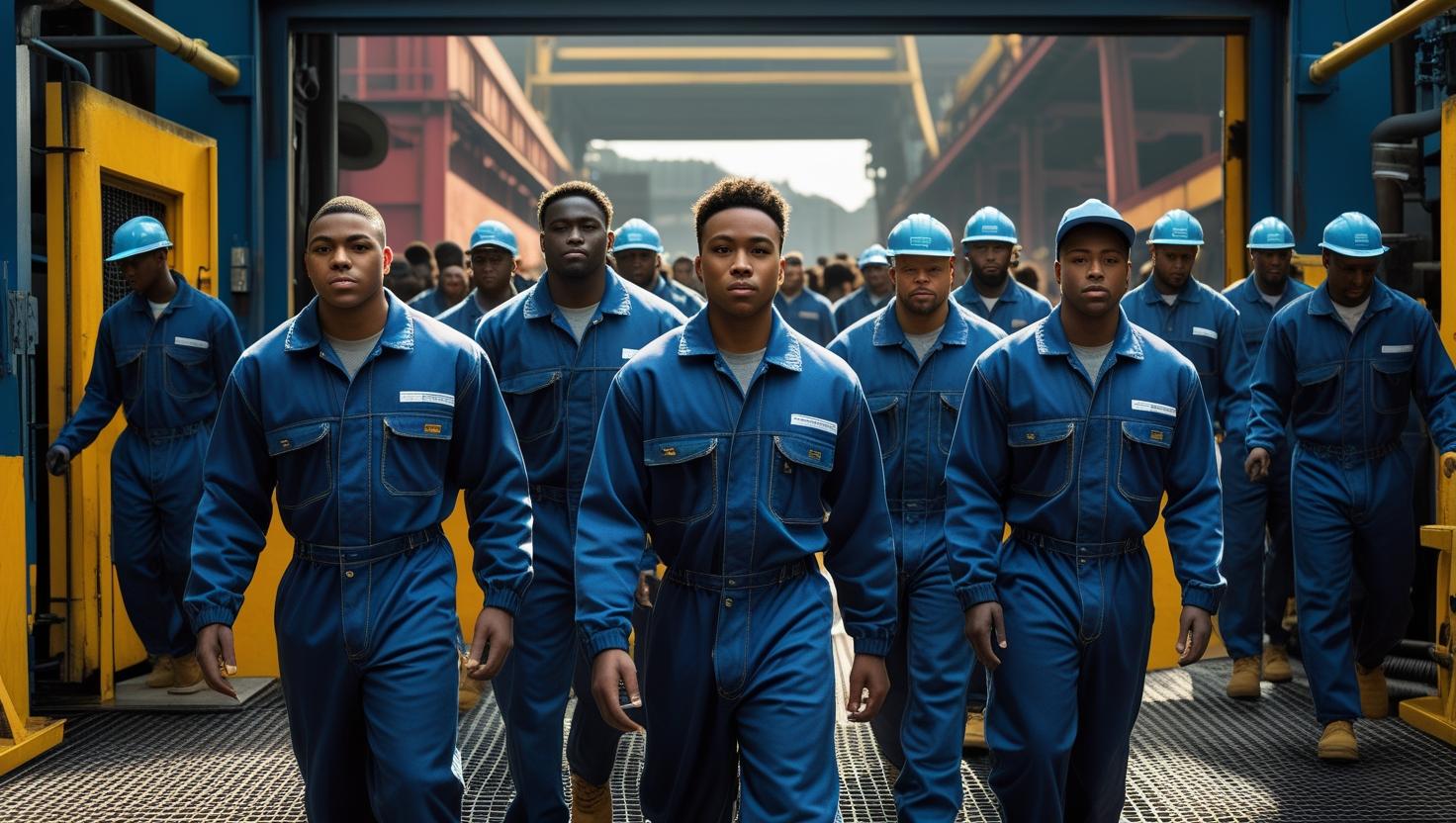
Abandonment, Erasure & Exploitation: How Black Steel Communities and Workers Were Sacrificed, Forgotten, Erased, and Must Be Restored.
The story of steel in America is not just one of industry and innovation—it is a story of sacrifice, resilience, and the generations of Black workers who built this nation’s backbone with their labor.
Yet, as headlines swirl around the Nippon Steel deal, the voices and struggles of Black communities devastated by the collapse of the steel industry remain conspicuously absent. Their suffering is not new, nor is their exclusion from the national conversation.
It is a continuation of a long history of political neglect, economic abandonment, and systemic erasure.
For decades, Black steelworkers endured grueling conditions, fought for fair wages, and contributed immeasurably to the prosperity of cities like Pittsburgh, Gary, and Birmingham.
They built the infrastructure that powered America’s rise, yet when the steel mills shuttered, their communities were left to decay. Their contributions all but erased for history.
The collapse of the industry was not just an economic downturn; it was a death sentence for neighborhoods that relied on steel jobs for survival.
Families lost their livelihoods, homes fell into disrepair, and entire communities were plunged into poverty from intentional abandonment. The devastation was profound, but the response from leadership was indifferent at best, negligent at worst.
The economic decline of Black communities in areas affected by deindustrialization is stark and deeply entrenched. The collapse of manufacturing and steel industries has left lasting scars, exacerbating disparities in employment, income, health outcomes and wealth.
In Pittsburgh where steel and manufacturing jobs once provided stability, Black communities have faced ongoing abandonment and disproportionate job losses. The Black unemployment rate in deindustrialized regions in Allegheny County has remained double or even triple that of white workers, with some areas experiencing rates exceeding 25%.
The median income for Black households in former industrial hubs is significantly lower than the national average. In places like Pittsburgh and Detroit, Black families earn 30-40% less than their white counterparts, reflecting the long-term economic stagnation caused by industrial flight.
The wealth gap has widened in deindustrialized cities, where Black families and communities have struggled to recover from job losses. Black households in these areas hold less than 5% of the region’s total wealth, making economic mobility impossible.
The economic downturn has led to widespread abandonment and housing instability. Black neighborhoods in former industrial communities like Braddock have seen higher foreclosure rates, increased vacancies, homelessness, crime, overdose deaths, and deteriorating infrastructure, further deepening economic distress.
These statistics underscore the urgent need for targeted investment and policy reforms to address the lasting impact of deindustrialization on Black communities. Without intentional efforts to rebuild and uplift these neighborhoods, the cycle of economic exclusion will persist.
Failed leadership, from past and current leaders in the Pittsburgh region, has played a significant role in the ongoing abandonment and decay of Black communities affected by deindustrialization.
The collapse of the steel and manufacturing industries disproportionately harmed Black workers, yet political leaders failed to implement policies that could have mitigated the damage.
It is an inaction and abandonment that persists to this very day and instead of prioritizing economic recovery for these communities, leadership often pursued policies that accelerated their decline or ignored their dire conditions all together.
Instead of prioritizing the needs of their most in need residents and revitalizing neighborhoods affected by industrial flight, local and federal governments allowed infrastructure to deteriorate.
Schools, roads, public services, and quality of life in Black communities suffered immensely from chronic underfunding, deepening economic and social disparities.
Black workers and communities were disproportionately affected by deindustrialization, yet leadership failed to acknowledge or address the racial disparities in economic recovery efforts. Policies often favored wealthier, politically connected, predominantly white areas, leaving Black neighborhoods behind.
Black residents and activists in the Mon Valley have long called for targeted investment and policy reforms, but their concerns have been largely ignored. Leadership has often prioritized the donor class, personal ambitions, and corporate interests over community needs, reinforcing cycles of poverty and neglect.
With billions of dollars in investment pledged to rejuvenate the steel industry, it is imperative to consider whether this investment will prioritize the communities that have endured the most hardship.
Will Black neighborhoods, historically neglected and abandoned, receive the resources needed for rebuilding? Or will they once again be sidelined, watching from the margins as prosperity is restored elsewhere?
The urgency of this moment cannot be overstated. The Nippon Steel deal represents an opportunity to correct decades of injustice, to ensure that the economic revival of steel does not bypass the very people who bore its burdens.
The failure of current leadership to center these communities in the conversation is glaring.
While local politicians continue to tout securing billions in funding, job creation and economic growth, they fail to acknowledge the racial disparities and ongoing neglect that have defined the steel industry’s decline.
They fail to acknowledge or take any responsibility for the suffering and dire conditions of their most in-needed constituents. Even as Pittsburgh and Allegheny County has been under Democratic, and now Progressive control for nearly 100 years.
Black workers in the Mon Valley were hit hardest by deindustrialization. Their struggles are often overlooked in talks about the future of steel, Med’s & Ed’s, and emerging tech industries in the region.
This omission is not accidental. It reflects a broader pattern of systemic disregard. Black communities are often excluded from economic recovery efforts, deemed unworthy of investment, and left to fend for themselves. Many of these communities are represented by Black individuals.
If this deal is to have any real meaning, it must go beyond corporate profits and political victories. It must be a commitment to justice, to repairing the harm inflicted on Black steelworkers and their families.
It must ensure that the neighborhoods that suffered the most are the first to benefit from revitalization. Anything less would be yet another betrayal, another chapter in a long history of abandonment, erasure, and ineffective leadership.
The ongoing exclusion of Black communities from economic recovery efforts by its own representation is not accidental. It is the result of decades of political decisions that have prioritized profits, and more recently, social status and personal ambitions over people.
Without intentional policy changes and the cultivation of new leadership across the board, at all levels, these communities will continue to suffer from the consequences of failed leadership.
The time for empty promises and symbolic gestures must be over. The investment in steel must be an investment in erased history, legacy, and people who built America.
The investments in Med’s& Ed’s must be an investment in the most in need people. The investment in AI, automation and robotics must be an investment in the most in people of Allegheny County. Anything less is unacceptable.
Leave a Reply