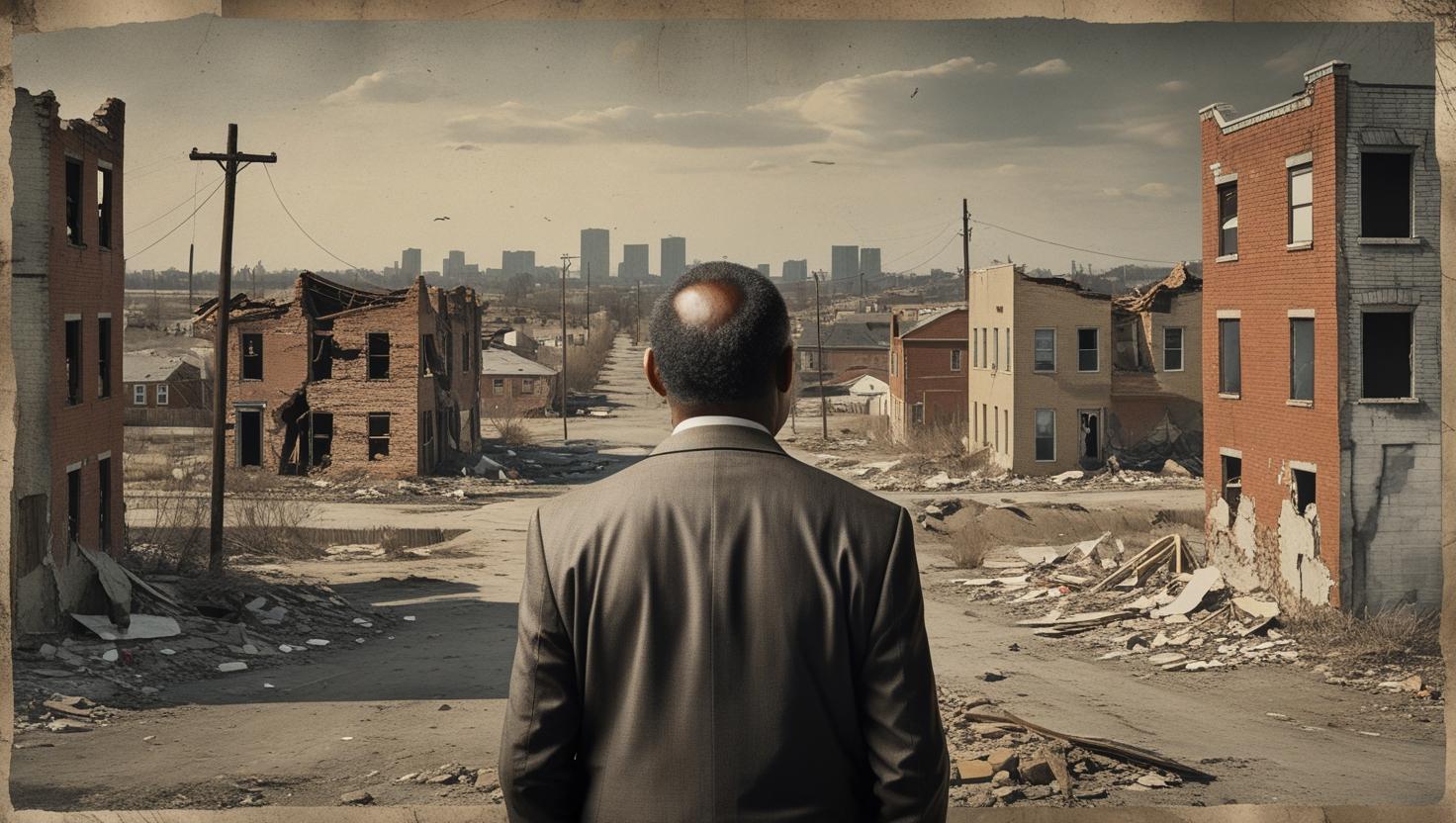
When leadership turns its back on the very people it was elected to serve, the betrayal consequences are devastating.
Struggling communities—already burdened by poverty, crime, and systemic neglect—find themselves unheard, unseen, and left to fend for themselves. Instead of addressing the urgent needs of residents, elected officials shift their focus elsewhere, chasing agendas that do nothing to alleviate the suffering of those who placed their trust in them.
This is more than neglect—it is betrayal. And betrayal demands action. Especially in America’s most impoverished, neglected and left behind Black communities, who now, more than ever before in American History, just so happen to be represented by Black leadership.
At a time when Black Americans face mounting challenges, the quality of life in impoverished communities is regressing instead of progressing.
Despite historic levels of Black representation at ALL levels of government representing them, far too many of these struggling communities remain ignored and neglected.
Even more disturbing is that these communities have been left behind and deteriorating in cities that have been dominated by Democratic and Progressive leadership for DECADES. This only magnifies the intentional Betrayal.
The problem is not a lack of Black faces in power, at least not at the local level, it is a lack of leadership committed to real change.
Beyond Popularity: A Call for Authentic Black Leadership
Again, more Black officials hold elected positions today than at any point in American history, yet for many Black communities, conditions have only deteriorated. Streets remain neglected, infrastructure is crumbling, resources remain scarce, and systemic injustices persist. Black Representation alone, is no longer enough.
If leadership fails to serve or deliver for the people, then the people must demand better.
Far too often, voters have chosen candidates based on popularity, social trends or familiarity, expecting change, only to watch their communities crumble further under weak, disconnected leadership, far more concerned with their own personal aspirations, social status, and future survival.
While Black leadership has made strides in representation over the past several decades, Black communities still struggle with persistent poverty, blight, underfunded schools, crime, and economic instability.
Political Incentives & Broader Agendas
Today, current Black leaders operate within political systems that reward engagement with national or international issues over direct community advocacy. This has led to prioritizing broader social justice movements, agendas or global concerns rather than focusing on the immediate needs of struggling Black neighborhoods.
While this betrayal is currently most prevalent at the congressional and State levels, in the age of social media, it has started to trickle down to the local levels, infiltrating and infesting the minds of local elected officials to the point that going “viral” is prioritized above the basic needs and duties of serving those who are depending on them.
During this extended period of leadership crisis and betrayal that has been plaguing the Black community for several decades now, Black leaders often inherit positions of power in cities or institutions that are already financially and structurally weakened.
This makes it even more difficult to enact meaningful change, leading them to focus on symbolic victories rather than direct economic or policy improvements.
Furthermore, Black-led organizations and political figures representing impoverished and economically deprived populations rely on funding from wealthy donor structures, corporations, political PACS, Foundations, and elites that push them toward issues that align with broader progressive agendas rather than grassroots community needs.
Without strong voter engagement and accountability measures, leaders may feel less pressure to address local concerns, instead turning their attention to the donor class, consultants, social media, the priorities of the least in need, and their own personal aspirations.
Many communities struggle with low voter turnout and political disengagement, which allows ineffective leadership to remain in place, thriving for years, unchallenged. Many residents in small, left behind communities, preoccupied with day-to-day survival, couldn’t name one person on their local council or the name of the community’s Mayor.
The reality is clear, electing Black faces without demanding true commitment to action does nothing to dismantle oppression, improve quality of life, create tangible economic opportunity, build generational wealth, or create lasting transformative change.
To counter these trends, residents must demand substance over symbolism. This means continuously cultivating new leaders and holding current ineffective leaders accountable through organized advocacy and direct pressure.
Supporting candidates with proven community investment, not just name recognition or social media status.
Building new independent grassroots movements that push for tangible policy changes rather than relying solely on elected officials, who may have little to no actual power.
True leadership must be rooted in service, not status. The future survival of Black communities in America will depend on leaders who prioritize real solutions over political positioning, personal ambitions, social media clicks, and performative politics.
Residents, young and old, must reevaluate, reassess, reorganize, and build new grassroots coalitions to amplify their collective voice and pressure local officials to fulfill their responsibilities.
Those who are capable must educate and inform fellow residents of their rights, hold town hall meetings, show up at council meetings and expose political failures through social media and community forums.
Residents must be encouraged to vote and hold leaders accountable at the ballot box, replacing those who have abandoned their people with representatives who are authentically committed to tangible change, over personal ambitions or aspirations.
The path forward requires cultivating new Black leadership, leaders rooted in the community, unafraid to challenge broken systems, and committed to transformative policies, not just performative rhetoric to appease the donor class and their agenda.
Voting must be more than a symbolic act; it must be a strategic decision that prioritizes substance over celebrity.
First, residents must vet candidates thoroughly, seeking out those with a proven dedication to the issues that matter, an understanding of the political process, how to create effective policy, and authentic knowledge on how to govern.
Second, communities must collectively engage in political education, ensuring voters understand how policies—not personalities or social media impact their daily lives.
Third, a movement must rise to hold all leaders accountable, rejecting empty promises in favor of tangible and measurable progress.
If an official has been in any elected position, representing the community for more than 5 years and nothing changed, or even more telling, only getting worse, then that individual must be replaced, immediately.
True progress will not come from electing the most well-known names—it will come from demanding leadership that works for the people. The time for passive representation is over; the time for revolutionary change is now.
The reenergized fight for justice begins with unity, resilience, unwavering determination, and supporting grass roots organizations like ours because when a community stands together, and not complicit in its own demise, it cannot be ignored.
Leave a Reply