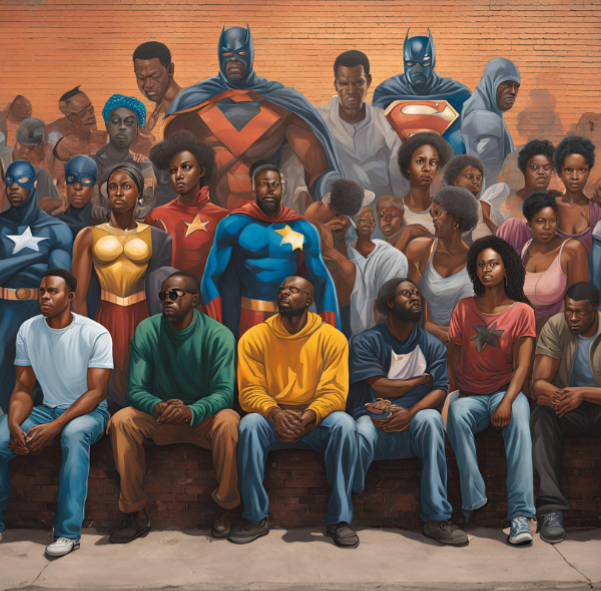
Even before the November 5th election, Black American Descendants of slaves were desperate for leadership. There’s been a severe crisis in Black leadership for several decades now in America.
Many Black Democrats and Progressives dreamt of an unbeatable coalition of Black and brown folks that never existed. Demographically, with the browning of America, many believed it to be destiny.
The coalition was predicated on the alliance between working-class poor people of color and wealthier white progressives driven by cultural issues, with anti-Republicanism as the key talking point. That destiny appears to have been proven wrong.
Most people of color groups never embraced nor ever wanted to be lumped into this imaginary coalition. Behind closed doors, most new arrival people of color had very little empathy or respect for a group of people who have been in the country since its inception yet are relegated as a permanent underclass.
Now immediately after, the election many Black Americans fear rollback of civil rights under Trump, even though they were already being stripped away long before. Some Black Americans believe the Republican party will improve jobs and economy. Civil rights groups vow to fight harder for racial equality.
All while Black American descendants of Slaves are more desperate for leaders than ever before in American history. Although America has more Black elected officials than it has ever had in its history, the quality of life for Black American descendants of slavery has continues to rapidly deteriorate.
Years of Ineffective Black political leadership has resulted in severe consequences for the Black community, exacerbating existing challenges and creating new ones.
Without effective leadership advocating for economic policies that benefit Black communities, economic disparities have widened. This includes limited access to jobs, lower wages, and next to zero opportunities for economic advancement.
Ineffective Black leadership has resulted in inadequate funding and resources for schools in Black communities. This has led to lower educational attainment, fewer opportunities for higher education, and a generational cycle of poverty.
Health outcomes will continue to suffer and get worse without strong advocacy for equitable healthcare policies. Black communities will continue to face higher rates of chronic diseases, limited access to healthcare services, and poorer overall health.
Current leadership has failed to address systemic issues within the criminal justice system. This has resulted in ongoing higher incarceration rates, police brutality, the killings of unarmed Black folks, and a lack of trust in law enforcement among Black communities.
Without effective political advocacy, housing policies have not addressed the needs of Black communities. This has led to higher rates of homelessness, housing discrimination, and substandard living conditions.
The Black leadership crisis has contributed to the social and political marginalization of Black communities. This includes a lack of representation in decision-making processes and limited influence over policies that affect Black lives.
Without strong and authentic Black leadership to advocate for the preservation and promotion of Black culture, cultural erosion and erasure will only accelerate. This will lead to a loss of cultural identity and heritage.
Black American descendants of slaves are desperate for leaders who are authentic and not consumed with their own personal aspirations, cosplay or political nostalgia. They are desperate for leaders who are committed to improving their dire economic condition with more than a promise of good paying union jobs.
With the accelerating advancement of AI, automation and robotics, those opportunities may be rapidly drying up, speeding up the creation of the coming “useless class”. The concept of the “useless class” refers to a potential future scenario where advancements in artificial intelligence (AI), robotics and automation render a significant portion of the human workforce obsolete. Of course, Black folks will be the first and most effected.
The ongoing and intentional economic deprivation and lack of access to wealth for impoverished Black American descendants of slavery have had far-reaching and devastating consequences, all while current leadership continues to turn a blind eye to the dire situation, chalking it up to normal and expected outcomes.
Centuries worth of Intentional economic deprivation has led to a cycle of poverty that is difficult to break. Without access to wealth, Black families will continue to struggle to afford basic necessities, leading to chronic, generational financial instability.
Underfunded schools, limited access to quality education, and fewer resources for extracurricular activities contribute to lower educational attainment and reduced future earning potential.
Economic deprivation is directly linked to poor health outcomes. Black American descendants of slaves face higher rates of chronic diseases, limited access to healthcare, and shorter life expectancies. The stress of financial instability also contributes to mental health issues.
Without wealth, Black families are more likely to experience housing instability and homelessness. They often live in neighborhoods with fewer resources, higher crime rates, and poorer living conditions. Most are renters.
Owning only ½ of 1% of wealth in America, Black Americans descendants of slaves have next to zero opportunities to invest in businesses, property, or education, which perpetuates the lineage wealth gap and will continue to prevent upward mobility.
Intentional economic deprivation has contributed to social and political marginalization for Black folks, making them nearly politically irrelevant. Black Americans descendants of slaves have no influence in political and economic spheres, which affects their ability to advocate for policies that could improve their circumstances.
The effects of economic deprivation are passed down through generations. Without the redistribution of wealth or Reparations, Black families will never be able to build generational wealth, which perpetuates the endless cycle of poverty and negates opportunities for future generations.
Addressing these issues head on requires comprehensive policies and systemic changes to ensure equitable access to wealth and opportunities for Black American descendants of slavery.
It will require Black political reform that produces strong and authentic leaders who are dedicated to securing Reparations for the crimes against humanity that continue to be perpetuated on Black American descendants of slavery here in America nearing 2025.
Reparations would provide financial resources to Black American Descendants of slaves, helping to close the lineage wealth gap. This economic empowerment will lead to increased investments in Black owned and controlled educational structures, healthcare systems, housing markets, and businesses, fostering economic growth and stability.
With increased financial resources that are owed to them, Black American descendants of slave’s could afford to develop their own superior educational opportunities for their children. This can lead to higher educational attainment, better job prospects, and a more skilled workforce.
Economic stability from returning the stolen wealth that white America has lived off for centuries will lead to the creation of superior healthcare systems and healthier living conditions. This will reduce health disparities and improve overall public health outcomes.
Reparations would acknowledge and address the historical crimes against humanity, injustices and systemic racism that have disadvantaged Black American descendants of slaves for generations. This will promote social justice and equity, fostering a more inclusive and fair society.
Financial resources from recuring, year round generational Reparations, provided by the United States Government and other institutions, will be used to revitalize left behind, politically neglected Black communities, improving infrastructure, creating jobs, and enhancing community services. This will lead to stronger, more resilient communities.
By increasing the purchasing power of Black American descendants of slaves, reparations will stimulate economic growth. More spending can lead to higher demand for goods and services, benefiting the overall American economy.
Reparations will support cultural initiatives that preserve, celebrate Black history and culture. This will enrich the cultural fabric of the nation and promote a deeper understanding and appreciation of the contributions made to American society by Slaves and their Descendants.
Acknowledging and addressing the wrongs of the past can help heal racial divisions and promote national unity. Reparations can be a step towards reconciliation and building a more cohesive society.
Overall, reparations can be a transformative step towards addressing historical injustices, promoting equity, and fostering a more prosperous and united nation.
All this circles back to the main issues which is, Black American descendants of slaves are desperate for leadership. Black folks, especially the younger generation, must address the severe Black leadership crisis by creating and participating in a strong political reform movement that encompasses key elements to ensure its effectiveness and sustainability.
A successful movement will need a clear vision and specific goals. This will unify supporters and provide a roadmap for action. The goals should be achievable, measurable and rooted in raw statistics data and facts.
Effective leadership will be crucial for guiding the movement, making strategic decisions, and inspiring others to join and stay committed. Leaders should be credible, passionate, and capable of mobilizing resources.
Building a broad base of grassroots support nationally is essential. This will involve engaging with communities, listening to their concerns, and involving them in the movement. Grassroots support will provide legitimacy and strength.
A well-thought-out strategy will be necessary to achieve the movement’s goals. This includes identifying key issues, target audiences, and the most effective methods for advocacy and action.
Clear and consistent communication is vital for spreading the movement’s message, rallying support, and countering opposition. This includes using various media platforms to reach a wide audience. Every chapter, branch or organization involved must be on the same page. It can’t be scattered.
Forming authentic alliances with other organizations and groups that share similar goals can amplify the movement’s impact. Coalitions can provide additional resources, expertise, and support.
While focusing on cultivating newly elected leadership, engaging in advocacy and lobbying efforts to influence current policymakers and public opinion is crucial. This involves presenting well-researched arguments, new policy ideals for a specific Black Agenda, mobilizing supporters, and maintaining pressure on those current ineffective decision-makers.
Securing sustainable, year round funding will be critical and necessary to support the movement’s activities and initiatives. This can come from donations, grants, fundraising events, and other sources.
The movement should be flexible and adaptable to changing circumstances and challenges. This includes being open to new ideas, learning from setbacks, and adjusting strategies as needed.
Maintaining accountability and transparency within the movement will build trust and credibility. This involves being open about goals, strategies, and the use of resources.
These elements will help create a strong and effective political reform movement that can drive meaningful change and cultivate authentic new leadership for those who are so desperate for leadership, but continue decade after decade, settling for imaginary Black superheroes.
Leave a Reply